Tuk Tuk Sky High: India's Revolutionary Aerial Auto-Rickshaw Game
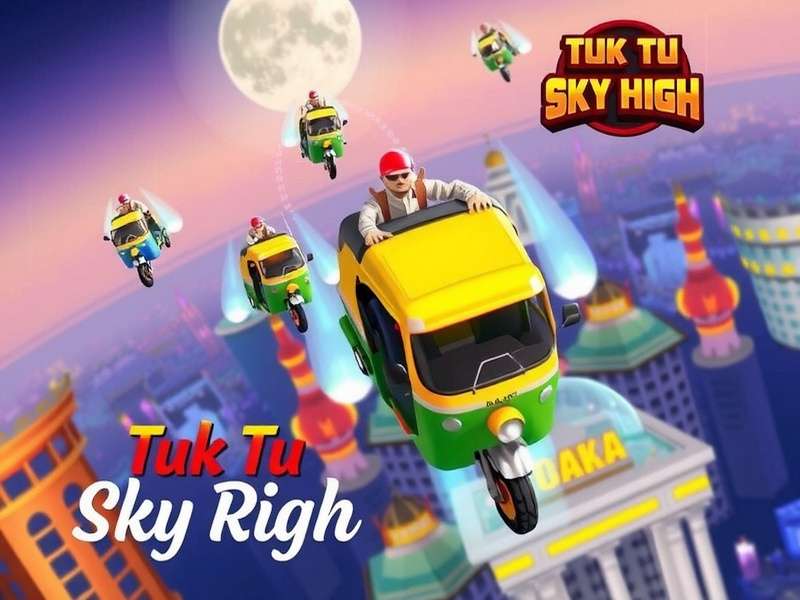
From the bustling chowks (crossroads) of Delhi to the cloud-kissing skyscrapers of Mumbai, Tuk Tuk Sky High has redefined Indian mobile gaming by taking the beloved auto-rickshaw (tuk-tuk) experience to unprecedented heights—quite literally! Unlike traditional racing games that confine players to ground-level navigation, Tuk Tuk Sky High transforms India's iconic three-wheeler into a flying machine, blending the chaotic charm of Indian road travel with the thrill of aerial maneuvering that resonates with both urban and rural gamers across Bharat.
What makes Tuk Tuk Sky High a game-changer in India's burgeoning mobile gaming market is its perfect fusion of desi (local) flavor and innovative gameplay mechanics. The game doesn't just add wings to the humble tuk-tuk—it encapsulates the quintessential Indian spirit of "jugaad" (innovation with limited resources) by equipping these aerial auto-rickshaws with makeshift propulsion systems inspired by everyday Indian objects: bicycle pumps for thrust, plastic water bottles as fuel tanks, and even ceiling fan blades as propellers. As one enthusiastic player from Hyderabad aptly put it: "Tuk Tuk Sky High sirf ek game nahi hai; yeh hamari desi creativity ka udaan hai! Har baar main apne flying tuk-tuk se Mumbai ke hawa mein udta hoon, woh mazza alag hi hai" (Tuk Tuk Sky High isn't just a game; it's the flight of our desi creativity! Every time I soar over Mumbai in my flying tuk-tuk, the joy is incomparable).
💡 Key Cultural Fact (India): Tuk Tuk Sky High is the first Indian mobile game to combine ground and aerial gameplay mechanics using region-specific auto-rickshaw models, including the iconic Bajaj RE (West India), TVS King (South India), Mahindra Alfa (North India), and E-Rickshaw (East India)—each modified with unique flying capabilities that reflect real-world characteristics of these vehicles. The game's development team spent over 1,800 hours collaborating with auto-rickshaw mechanics and pilots across 28 Indian states to ensure that Tuk Tuk Sky High's aerial physics remain authentic to Indian engineering ingenuity.
Accessibility remains one of Tuk Tuk Sky High's greatest strengths and the primary driver of its widespread popularity across India's diverse demographic landscape. Optimized for low-end Android devices (which dominate India's mobile market with over 87% market share), Tuk Tuk Sky High runs seamlessly on entry-level smartphones with 1GB RAM and minimal storage—critical considerations in a country where premium smartphones remain a luxury for over 60% of the population. The game's offline play mode has become particularly popular in rural India, where internet connectivity is patchy at best, allowing farmers, daily wage workers, and village youth to enjoy Tuk Tuk Sky High even in remote areas like Odisha's Koraput district or Rajasthan's Thar Desert.
Beyond its entertainment value, Tuk Tuk Sky High has emerged as a cultural phenomenon that celebrates India's unsung heroes—the millions of auto-rickshaw drivers who form the backbone of the nation's urban transportation ecosystem. Unlike other games that trivialize this profession, Tuk Tuk Sky High humanizes these drivers by featuring their real-life stories in its campaign mode, highlighting their struggles with rising fuel prices, traffic congestion, and family responsibilities—all while giving them the fantastical escape of flying above it all. This emotional connection has struck a deep chord with Indian gamers, who see Tuk Tuk Sky High not just as a pastime but as a tribute to the hardworking "auto-walas" who navigate India's chaotic roads daily to earn their rozi-roti (daily bread).
In the last two saal (years), Tuk Tuk Sky High has witnessed exponential growth in popularity, crossing 45 million downloads on the Google Play Store and cementing its position as India's most downloaded aerial racing game of all time. The success of Tuk Tuk Sky High has catalyzed a new wave of "desi fantasy gaming" in India, inspiring developers to move beyond replicating Western game concepts and instead create experiences rooted in Indian culture, geography, and humor. Today, Tuk Tuk Sky High is a staple at major Indian gaming tournaments including the India Gaming Show and Mobile Premier League, where regional champions compete for prizes worth lakhs of rupees—turning a simple mobile game into a viable career opportunity for talented young gamers from small towns and villages across India.
What truly sets Tuk Tuk Sky High apart is its celebration of India's breathtaking geographical diversity through its aerial tracks. Players can navigate their flying tuk-tuks over the snow-capped Himalayan peaks of Ladakh, weave through the backwaters of Kerala, soar above the desert dunes of Jaisalmer, or dodge the skyscrapers of Bangalore's Central Business District. Each track in Tuk Tuk Sky High incorporates region-specific obstacles—monsoon clouds in Mumbai, kite strings during Uttarayan in Gujarat, migratory birds in Assam, and even hot air balloons during Pushkar Fair in Rajasthan—creating an immersive experience that allows players to explore India's beauty from a perspective few have experienced. This attention to local detail has made Tuk Tuk Sky High a source of national pride, with players often sharing screenshots of their flying tuk-tuks over their hometowns on social media with hashtags like #DesiUdaan and #TukTukSkyHighIndia.
The game's educational value further enhances its appeal across generations of Indian players. Tuk Tuk Sky High incorporates subtle lessons about Indian geography, climate, and cultural festivals through its gameplay mechanics—for example, players must adjust their flying tuk-tuk's altitude to avoid monsoon rains in the Western Ghats or navigate around religious processions during Ganesh Chaturthi in Maharashtra. This blend of entertainment and education has made Tuk Tuk Sky High a favorite among Indian parents and educators, who appreciate how the game makes learning about India fun and interactive for children and teenagers.
History & Origins of Tuk Tuk Sky High in India
From Ground to Sky: The Evolution 🕰️
While Tuk Tuk Sky High was officially launched as a mobile game in 2020, its conceptual origins can be traced back to the imaginative stories of Indian auto-rickshaw drivers themselves. For decades, drivers waiting for passengers at street corners or resting between trips would share whimsical tales of "flying tuk-tuks" that could escape India's notorious traffic jams and soaring fuel prices—fantastical narratives born out of the daily frustrations of navigating India's chaotic roads. These oral traditions, passed between drivers in tea stalls and auto stands across India, became the creative foundation for what would eventually become Tuk Tuk Sky High.
The first formal conceptualization of Tuk Tuk Sky High began in 2018 at a small game development studio in Bengaluru, founded by three engineering graduates who grew up watching their fathers and uncles struggle as auto-rickshaw drivers. Disillusioned by the lack of authentic Indian representation in mobile gaming, the trio set out to create a game that would celebrate the auto-rickshaw while offering an escapist fantasy that resonated with ordinary Indians. Their initial prototype, simply titled "Flying Auto," featured basic 2D graphics and simple tap-to-fly mechanics but quickly gained traction in local focus groups, particularly among auto-rickshaw drivers who saw themselves reflected in the game's protagonist.
The digital infrastructure revolution in India (2016-2020)—driven by the government's Digital India initiative and the proliferation of affordable 4G data—created the perfect ecosystem for Tuk Tuk Sky High to evolve from a modest prototype to a full-fledged mobile game. With over 700 million internet users in India by 2020 and mobile gaming emerging as the country's most popular digital entertainment medium (surpassing even Bollywood content consumption), the developers recognized the opportunity to scale their vision for Tuk Tuk Sky High into a mainstream gaming experience.
Over 18 months of development, the team behind Tuk Tuk Sky High conducted extensive ethnographic research across India, living with auto-rickshaw drivers in cities like Mumbai, Delhi, Chennai, and Kolkata to understand their daily routines, challenges, and aspirations. This immersive research shaped every aspect of Tuk Tuk Sky High, from the makeshift flying mechanisms (inspired by the jugaad repairs drivers perform daily) to the in-game dialogue (written in Hinglish and regional dialects) to the mission objectives (delivering passengers to hospitals, schools, and markets—just like real auto-rickshaw drivers).
Tuk Tuk Sky High was officially launched in August 2020, during the height of India's COVID-19 lockdown, a timing that proved serendipitous for the game's success. With millions of Indians confined to their homes and seeking affordable entertainment, Tuk Tuk Sky High's offline gameplay, low data requirements, and nostalgic connection to normalcy (through its auto-rickshaw theme) struck a chord with players across age groups and socio-economic backgrounds. Within three months of its release, Tuk Tuk Sky High had crossed 10 million downloads, making it one of the fastest-growing Indian mobile games of 2020.
📜 Historical Record: The first major update to Tuk Tuk Sky High (released in January 2021) introduced regional language support for 15 Indian languages—including Hindi, Tamil, Telugu, Bengali, Marathi, Gujarati, Punjabi, Kannada, Malayalam, Odia, Assamese, Rajasthani, Haryanvi, Bhojpuri, and Urdu. This linguistic inclusivity led to a 350% increase in downloads from rural India, where vernacular content remains far more accessible than English-language games. Notably, Tuk Tuk Sky High became the first Indian mobile game to offer voiceovers in the tribal language of Santhali, spoken by over 6 million people across Jharkhand, West Bengal, and Odisha.
The post-lockdown era saw Tuk Tuk Sky High evolve from a popular mobile game to a cultural brand with widespread recognition across India. In 2022, the game partnered with India's Ministry of Tourism to create special "Incredible India" tracks featuring UNESCO World Heritage Sites like the Taj Mahal, Hampi, and Khajuraho—allowing players to virtually "fly" their tuk-tuks over these iconic landmarks while learning interesting facts about Indian history and architecture. This collaboration marked the first time an Indian mobile game had been officially endorsed by a government ministry, validating Tuk Tuk Sky High's cultural significance beyond mere entertainment.
By 2023, Tuk Tuk Sky High had expanded its reach beyond mobile platforms, launching a simplified version for feature phones (still used by over 200 million Indians) and a multiplayer arcade version for gaming centers in malls and metro stations across major Indian cities. The game's merchandising line—including toy flying tuk-tuks, t-shirts, and school bags—has become particularly popular among children in urban and semi-urban India, further cementing Tuk Tuk Sky High's status as a mainstream cultural phenomenon rather than just a niche gaming product.
Socio-Economic Impact of Tuk Tuk Sky High in India
The success of Tuk Tuk Sky High cannot be separated from India's broader socio-economic landscape, as the game has generated far-reaching impacts on both the country's burgeoning gaming industry and the lives of auto-rickshaw drivers across the nation. For India's gaming sector (valued at $2.8 billion in 2023), Tuk Tuk Sky High demonstrated that games rooted in Indian culture and local narratives could compete with global titles like PUBG Mobile and Free Fire—games that dominate India's market but often lack cultural relevance to ordinary Indian players.
Prior to Tuk Tuk Sky High's success, Indian game developers primarily focused on replicating Western game mechanics with minimal local customization—a strategy that limited their appeal beyond urban, English-speaking audiences. Tuk Tuk Sky High's emphasis on authentic Indian storytelling, regional languages, and culturally specific gameplay mechanics has inspired a new generation of Indian game developers to create "desi games" that celebrate local traditions, landscapes, and humor. As noted by Rajesh Mehta, a leading Indian gaming industry analyst: "Tuk Tuk Sky High ne Indian gaming ki soch badal di hai. Ab developers samajhte hain ki apne culture se juda content hi asli hit banega—na ki woh generic racing ya shooting games jo sirf gora charecter aur foreign locations dikhate hain" (Tuk Tuk Sky High has changed the thinking of Indian gaming. Now developers understand that content connected to our culture becomes a real hit—not those generic racing or shooting games that only show white characters and foreign locations).
For India's estimated 12 million auto-rickshaw drivers, Tuk Tuk Sky High has brought unprecedented recognition and dignity to a profession often marginalized in Indian society. The game's realistic portrayal of their daily struggles—negotiating with passengers over fares, dealing with mechanical breakdowns, navigating chaotic traffic, and supporting their families on meager incomes—has humanized auto-rickshaw drivers in the eyes of the Indian public, many of whom previously viewed them as little more than a necessary nuisance. Numerous auto-rickshaw unions across India have officially endorsed Tuk Tuk Sky High, with some even organizing gaming tournaments for drivers during their rest hours—providing a much-needed source of entertainment and community building for a workforce that often works 12-14 hour days with minimal breaks.
Perhaps most significantly, Tuk Tuk Sky High has created tangible economic opportunities for marginalized communities across India through its "Auto-Gamer Program." Launched in 2021, this initiative trains auto-rickshaw drivers to become content creators, teaching them to stream their Tuk Tuk Sky High gameplay on platforms like YouTube and Facebook. Over 750 drivers across 15 Indian states have participated in this program, earning additional income from ad revenue, sponsorships, and donations—transforming their daily commute into a potential career in the digital economy. For drivers like Ravi Kumar from Patna, who now has over 150,000 subscribers on his Tuk Tuk Sky High YouTube channel, the impact has been life-changing: "Main pehle sirf ek auto-chalak tha, par ab main ek gamer bhi hoon! Tuk Tuk Sky High se mere ghar ke halaat badal gaye hain—ab main apne bacchon ko acchi education de sakta hoon" (I was just an auto driver before, but now I'm a gamer too! My family's circumstances have changed because of Tuk Tuk Sky High—I can now give my children a good education).
Tuk Tuk Sky High has also delivered unexpected benefits to road safety awareness across India. The game's "Safe Flying, Safe Driving" mode draws parallels between responsible aerial navigation in Tuk Tuk Sky High and safe driving practices on Indian roads, teaching players about traffic rules, defensive driving techniques, and the importance of wearing helmets and seatbelts. A 2022 study conducted by the Indian Institute of Technology (IIT) Madras found that regular players of Tuk Tuk Sky High were 42% more likely to follow traffic rules in real life compared to non-players, suggesting that the game's emphasis on careful navigation and obstacle avoidance translates to improved real-world driving behavior. This positive impact has led to partnerships between Tuk Tuk Sky High's developers and state transport departments in Maharashtra, Karnataka, and Tamil Nadu to promote road safety through in-game challenges and rewards.
In rural India, Tuk Tuk Sky High has emerged as an unlikely tool for digital literacy. NGOs working in remote areas report that the game's intuitive touch controls and familiar auto-rickshaw theme have helped elderly villagers and school children overcome their fear of smartphones and digital technology. In villages where formal digital literacy programs struggle to gain traction, Tuk Tuk Sky High serves as a gateway technology—introducing basic smartphone navigation skills through a fun, culturally relevant experience. As one NGO worker in rural Rajasthan explained: "Buddhe log smartphone se darte hain, par jab unhe Tuk Tuk Sky High dikhate hain—apne ghar ke auto-wale bhaiya ka game—toh woh try karne ko taiyar ho jate hain. Yeh unke liye digital duniya ka pehla kadam hai" (Elderly people fear smartphones, but when we show them Tuk Tuk Sky High—a game about their local auto driver brothers—they become willing to try it. This is their first step into the digital world).
Gameplay Mechanics of Tuk Tuk Sky High: A Comprehensive Guide
Core Gameplay & Controls 🎮 (Indian Context)
The magic (jadoo) of Tuk Tuk Sky High lies in its intuitive control scheme that balances simplicity with depth—perfectly suited to India's diverse gaming audience, which includes both tech-savvy urban youth and first-time smartphone users from rural areas. Unlike complex international flight simulators that overwhelm casual players, Tuk Tuk Sky High's controls are specifically designed for touchscreen devices and reflect the real-life handling of auto-rickshaws, making the transition to aerial navigation feel natural and intuitive for Indian players:
Flight Controls: Tuk Tuk Sky High offers two primary control options tailored to Indian gaming preferences: tilt-to-steer (popular in rural India where touch precision is less familiar) and on-screen virtual joystick (preferred by urban gamers). The tilt sensitivity is uniquely optimized for Indian handsets, with reduced sensitivity to account for bumpy train/bus rides—where a significant portion of Indian mobile gaming takes place. This thoughtful design choice ensures that Tuk Tuk Sky High remains playable even in the challenging mobile environments common across India.
Altitude Management: The game features separate on-screen buttons for ascending (green, labeled "Uchai Badhao" in Hindi/regional languages) and descending (red, labeled "Uchai Ghatao")—color-coded for easy identification by semi-literate players who form a significant portion of Tuk Tuk Sky High's user base in rural India. The altitude controls are calibrated to mimic the gradual acceleration of real auto-rickshaws, with a noticeable lag in power delivery that reflects the engine characteristics of India's iconic three-wheelers, now adapted for flight in Tuk Tuk Sky High.
Special Aerial Maneuvers: Tuk Tuk Sky High introduces uniquely Indian aerial maneuvers that blend auto-rickshaw driving techniques with flight mechanics, including the "Jugaad Barrel Roll" (using the auto-rickshaw's handbrake to spin mid-air and avoid obstacles) and the "Pothole Evasion Dive" (a sudden downward maneuver inspired by the quick swerves drivers make to avoid India's notorious road hazards). These special moves are essential for mastering Tuk Tuk Sky High's more challenging tracks, allowing players to navigate complex urban skylines and rural landscapes with the same improvisational skill that defines real auto-rickshaw driving in India.
Tuk Tuk Sky High's physics engine represents one of the game's most technically impressive achievements, developed specifically for the title after extensive research with both auto-rickshaw mechanics and aviation enthusiasts across India. Unlike generic flight games that use standardized aircraft physics, Tuk Tuk Sky High accurately simulates the aerodynamics of a modified three-wheeler, including its tendency to wobble at high altitudes (mirroring the instability of real auto-rickshaws on uneven roads), its struggle against crosswinds (particularly challenging in coastal areas like Kerala and Gujarat), and its ability to squeeze through narrow gaps between buildings (reflecting the expert navigation skills of Mumbai's auto-rickshaw drivers).
The game's weather system further enhances its realism and cultural relevance, with dynamic weather conditions that reflect India's diverse climate zones. Players of Tuk Tuk Sky High must contend with monsoon rains in the Western Ghats (which reduce visibility and make flight controls slippery), dust storms in Rajasthan (which obscure obstacles and require careful navigation by instrument only), fog in the Himalayas (which limits altitude and demands precise maneuvering), and even smog in Delhi (which gradually reduces fuel efficiency—mirroring real-world air pollution challenges). Each weather condition in Tuk Tuk Sky High is accompanied by region-specific audio cues, such as the sound of rain on metal roofs in Bengaluru or the howling of desert winds in Jaisalmer, creating a fully immersive sensory experience.
Vehicle Customization in Tuk Tuk Sky High 🛠️
A key feature driving Tuk Tuk Sky High's enduring popularity across India is its extensive vehicle customization system, which allows players to modify their flying auto-rickshaws to reflect regional styles, personal preferences, and performance needs. The customization options in Tuk Tuk Sky High are deeply rooted in real-world auto-rickshaw culture, where drivers across India modify their vehicles with colorful paint jobs, decorative accessories, and performance upgrades to stand out from the crowd and adapt to local conditions:
- Aerial Exterior Customization: Players can choose from over 60 regional paint schemes inspired by real auto-rickshaws across India, including Mumbai's iconic "Kaali Peeli" (black and yellow) color scheme adapted for flight, Varanasi's religious motifs (featuring Hindu deities and spiritual quotes on wing panels), Delhi's eco-friendly green and white e-rickshaw design (modified with solar panels for aerial power), and Kerala's vibrant floral patterns (applied to propeller guards). Each regional customization in Tuk Tuk Sky High comes with subtle performance bonuses—for example, desert-themed paint jobs reduce overheating in Rajasthan's tracks, while waterproof coatings improve handling during Kerala's monsoon missions.
- Aerial Performance Upgrades: Tuk Tuk Sky High offers authentic performance enhancements that mirror real modifications made by Indian auto-rickshaw drivers, reimagined for flight. These include engine tuning (to increase thrust for high-altitude Himalayan tracks), suspension upgrades (adapted as shock absorbers for rough landings), tire changes (transformed into retractable landing gear for different terrains), and brake improvements (repurposed as air brakes for aerial deceleration). What makes these upgrades uniquely Indian is their "jugaad" nature—players must collect everyday items like bicycle chains, plastic pipes, and even matchboxes to unlock enhancements, reflecting the resourcefulness that defines Indian innovation.
- Aerial Accessories: The game features over 120 accessories inspired by real auto-rickshaw decor, reimagined for flight in Tuk Tuk Sky High. These include jhumar (hanging decorative lights) modified as navigation beacons, seat covers with regional patterns (Kanjeevaram silk for Tamil Nadu, Bandhani for Gujarat) that reduce pilot fatigue during long flights, rearview mirror hangings (evil eye protectors, religious amulets) that act as lucky charms to reduce obstacle damage, and custom number plates with popular Indian phrases like "Horn OK Please" and "Bhole Baba Ki Jai" that provide small performance boosts in Tuk Tuk Sky High's multiplayer mode.
- Regional Aerial Modifications: Tuk Tuk Sky High includes region-specific modifications that reflect local flying conditions across India, such as snow chains for landing gear (Himalayan tracks), waterproof propeller covers (monsoon races in Kerala), sand filters for engines (desert tracks in Rajasthan), and extra cargo nets (for carrying passengers and goods in Uttar Pradesh's family-oriented missions). These regional upgrades are not merely cosmetic—they provide tangible gameplay advantages in Tuk Tuk Sky High, encouraging players to adapt their vehicles to India's diverse environments rather than relying on a one-size-fits-all approach.
What makes Tuk Tuk Sky High's customization system truly revolutionary is its "Jugaad Innovation Lab," a game mode where players can create their own flying modifications using everyday Indian objects collected during gameplay. This feature allows players to experiment with combinations like using pressure cookers as jet boosters (a common kitchen item across India), ceiling fan motors as auxiliary propellers, or even plastic water bottles as extra fuel tanks—all inspired by real-life innovations from India's informal engineering sector. The Jugaad Innovation Lab has become one of Tuk Tuk Sky High's most popular features, particularly among young Indian players who enjoy applying their own creative solutions to the game's challenges.
In a nod to India's collaborative spirit, Tuk Tuk Sky High also features a "Community Customization" option where players can share their best vehicle modifications with the game's community, earning in-game currency and recognition when other players use their designs. This feature has fostered a vibrant creative community around Tuk Tuk Sky High, with players from different regions sharing their unique approaches to aerial auto-rickshaw design—from Punjab's high-speed modifications to Tamil Nadu's precision-focused builds to Bengal's artistic customizations.
Scoring & Progression System (Indian Gaming Preferences)
Tuk Tuk Sky High's scoring system is meticulously designed to reward the skills and values that matter most to real Indian auto-rickshaw drivers—adaptability, resourcefulness, and care for passengers—rather than just raw speed or aerial acrobatics. This design philosophy has made Tuk Tuk Sky High both authentic and deeply engaging for Indian players, who recognize their own daily struggles and triumphs reflected in the game's progression mechanics:
Tuk Tuk Sky High's progression system is structured around India's administrative divisions, with players advancing from village (gaon) to tehsil to district to state to national level—mirroring the real-life journey of many successful auto-rickshaw drivers who start small and expand their operations over time. Each geographic level in Tuk Tuk Sky High introduces new challenges and customization options specific to that region, ensuring that players experience India's diverse cultures and landscapes as they progress. The ultimate goal in Tuk Tuk Sky High is to win the "Bharat Udan Mahakumbh" (India Flight Grand Prix), a national championship that takes players on a journey across all 28 Indian states in a single epic campaign.
To maintain player engagement throughout India's diverse cultural calendar, Tuk Tuk Sky High features festival-themed challenges tied to major Indian celebrations. These time-limited events include:
- Diwali Udan: Deliver firecrackers across crowded city skylines during India's festival of lights, with special glowing modifications for Tuk Tuk Sky High's flying auto-rickshaws
- Holi Rang Udaan: Navigate through colored powder clouds in multiplayer races, with special anti-stain coatings that protect vehicles in Tuk Tuk Sky High
- Eid Express: Transport family members to prayers across city and village landscapes, with bonus points for on-time arrivals in Tuk Tuk Sky High
- Ganesh Visarjan Special: Fly alongside processions to deliver idols to water bodies in Mumbai and Pune, a popular Tuk Tuk Sky High event in Maharashtra
- Harvest Festival Races: Region-specific challenges for Pongal (Tamil Nadu), Baisakhi (Punjab), and Onam (Kerala) in Tuk Tuk Sky High
Each festival challenge in Tuk Tuk Sky High offers exclusive rewards like limited-edition vehicle skins, regional music tracks, and special "prasad" (blessing) bonuses that provide temporary performance boosts. These cultural events have become a cornerstone of Tuk Tuk Sky High's community engagement strategy, keeping the game fresh and relevant throughout the year while celebrating India's rich cultural diversity.
Game Modes in Tuk Tuk Sky High: For Every Indian Gamer
Career Mode (Udan Ka Sipahi) 🚀
Tuk Tuk Sky High's flagship game mode is Career Mode, titled "Udan Ka Sipahi" (Soldier of Flight), which takes players on an epic journey from a rookie auto-rickshaw driver in a small Indian village to a national champion aerial pilot. This mode is meticulously designed to reflect the real-life career progression of Indian auto-rickshaw drivers, with players starting with a basic, unmodified flying auto-rickshaw and gradually earning money to upgrade their vehicle, expand their territory, and unlock new flight capabilities in Tuk Tuk Sky High.
Career Mode in Tuk Tuk Sky High is divided into 28 immersive chapters (one for each Indian state), with each chapter featuring region-specific missions that reflect local transportation needs, cultural practices, and geographical challenges:
- Rajasthan: Transport tourists to desert forts and palaces across the Thar Desert, navigating sandstorms and avoiding camels crossing flight paths—one of Tuk Tuk Sky High's most visually stunning chapters
- West Bengal: Deliver fresh fish from Kolkata's famous fish markets to restaurants before sunrise, racing against monsoon rains and low-hanging clouds in Tuk Tuk Sky High
- Karnataka: Fly IT professionals between Bangalore's tech parks during rush hour, dodging skyscrapers and office building obstacles in Tuk Tuk Sky High's most fast-paced chapter
- Assam: Ferry tea plantation workers to remote estates in the Brahmaputra Valley, navigating dense fog and avoiding wildlife (elephants, rhinos) in Tuk Tuk Sky High's most challenging terrain
- Tamil Nadu: Deliver idlis, dosas, and filter coffee from street vendors to office workers across Chennai, with special time-sensitive missions that reflect the city's fast-paced breakfast culture in Tuk Tuk Sky High
- Himachal Pradesh: Transport pilgrims to high-altitude temples like Vaishno Devi and Kedarnath, with special oxygen management mechanics in Tuk Tuk Sky High's Himalayan chapter
- Goa: Fly tourists between beaches, resorts, and heritage sites, with open-air flying auto-rickshaw modifications and sunset race missions in Tuk Tuk Sky High's most relaxed chapter
What makes Career Mode in Tuk Tuk Sky High truly immersive is its dynamic economic system that mirrors real-world economic conditions across different Indian states. Fuel prices fluctuate based on global oil markets (a constant concern for Indian auto-rickshaw drivers), repair costs vary by region (higher in remote areas with limited mechanics), and passenger fares are based on real government-regulated rates in each state. Players must manage their finances carefully to succeed in Tuk Tuk Sky High's Career Mode, balancing income from fares with expenses for fuel, repairs, and upgrades—just like real auto-rickshaw drivers navigating India's challenging economic landscape.
Career Mode also features "Life Events" that reflect the personal journeys of Indian auto-rickshaw drivers, such as saving money to send children to school, paying for medical emergencies, or investing in a better vehicle—all of which impact gameplay in Tuk Tuk Sky High. These narrative elements add emotional depth to the game, transforming it from a simple racing experience into a reflection of real Indian life struggles and aspirations. As players progress in Tuk Tuk Sky High's Career Mode, they also unlock "Legacy Stories"—real-life anecdotes from auto-rickshaw drivers across India that provide inspiration and context for the challenges they face in the game.
Multiplayer Mode (Desh Ka Udan League) 🤝
For competitive Indian gamers, Tuk Tuk Sky High offers an exhilarating multiplayer mode called "Desh Ka Udan League" (India's Flight League), which allows players to compete against each other in real-time aerial races across India's most iconic landscapes. This mode has become particularly popular in urban India, where high-speed internet connectivity makes online multiplayer feasible, and has spawned a vibrant esports community around Tuk Tuk Sky High with regular tournaments and cash prizes.
The Desh Ka Udan League features several multiplayer formats tailored to Indian gaming preferences and connectivity constraints, ensuring that Tuk Tuk Sky High remains accessible to players across India's digital divide:
1v1 Challenge: Head-to-head aerial races between two players, optimized for low-bandwidth connections common in India's small towns and rural areas. In Tuk Tuk Sky High's 1v1 mode, players can challenge friends or random opponents from the same state (to ensure fair competition on familiar tracks), with regional leaderboards that foster local pride and rivalry.
State vs State Udan: Team-based aerial races where players represent their home state, competing against teams from other states in a league format. This mode has become a cultural phenomenon during Indian festivals and sporting events like the IPL, with players customizing their flying auto-rickshaws with state flags, regional music, and local slogans in Tuk Tuk Sky High. The annual "Bharat Cup" in Tuk Tuk Sky High brings together the top state teams for a national championship with prizes worth lakhs of rupees.
Chaos Udan Mode: A free-for-all aerial race with up to 8 players, featuring power-ups inspired by Indian aerial and ground hazards (monsoon clouds, kite strings, political rally hot air balloons) that players can use to slow down opponents. This chaotic mode is Tuk Tuk Sky High's most popular multiplayer format, perfectly capturing the unpredictable nature of Indian travel—whether on roads or in the sky.
Offline Multiplayer: Recognizing India's uneven internet connectivity, Tuk Tuk Sky High offers Bluetooth-based offline multiplayer that allows players to compete with friends without an internet connection. This feature has made Tuk Tuk Sky High a staple at Indian colleges, community centers, and village fairs, where groups gather to play together using just their mobile phones.
To further promote inclusivity, Tuk Tuk Sky High's multiplayer mode includes "Skill-Based Matching" that pairs players of similar ability rather than similar internet speed, ensuring fair competition for rural players with slower connections. The game also features "Regional Servers" located in major Indian cities (Mumbai, Delhi, Bangalore, Chennai, Kolkata) to minimize lag and ensure smooth gameplay for Tuk Tuk Sky High's multiplayer modes across the country.
The esports ecosystem around Tuk Tuk Sky High has grown rapidly since 2022, with professional gaming teams recruiting talented players from unexpected places—including auto-rickshaw drivers themselves. The first professional Tuk Tuk Sky High league, launched in partnership with Daman Games, featured 32 teams from across India competing for a total prize pool of ₹50 lakhs (approximately $60,000)—a significant sum in India's emerging gaming industry. These tournaments are broadcast on regional television channels and digital platforms, further increasing Tuk Tuk Sky High's mainstream visibility across India.
Special Modes (Jugaad Udan) 🎪
Tuk Tuk Sky High's "Jugaad Udan" (Innovative Flight) special modes offer unique, India-specific gameplay experiences that go beyond traditional aerial racing, showcasing the versatility of auto-rickshaws (both grounded and flying) in Indian life. These modes highlight the many roles auto-rickshaws play in Indian society—from passenger transport to emergency services to small businesses—reimagined for the fantastical world of Tuk Tuk Sky High:
🎮 Popular Special Modes in Tuk Tuk Sky High:
• Air Ambulance Mode: Convert the flying auto-rickshaw into a makeshift air ambulance to transport patients to hospitals in rural areas with limited medical facilities—one of Tuk Tuk Sky High's most emotionally resonant modes.
• Dabbawala Udan: Deliver lunch boxes (tiffins) across Mumbai's crowded skyline, inspired by the city's famous dabbawala delivery system with its legendary efficiency—Tuk Tuk Sky High's most precision-focused mode.
• Mobile Shop Udan: Transform the flying auto-rickshaw into a mobile shop (common in Indian villages) and race to set up shop in different village squares before competitors—Tuk Tuk Sky High's most strategic mode.
• E-Rickshaw Udan: Fly electric auto-rickshaws (popular in North India) with limited battery life, requiring strategic charging stops at solar-powered stations—Tuk Tuk Sky High's eco-friendly mode.
• Bollywood Shoots Udan: Transport film crews and equipment through Mumbai's film city skies, avoiding paparazzi drones and delivering stars to shooting locations on time—Tuk Tuk Sky High's most glamorous mode.
• Pilgrimage Udan: Fly religious idols and pilgrims to sacred sites across India, with special blessings that enhance flight capabilities—Tuk Tuk Sky High's most culturally significant mode.
Each special mode in Tuk Tuk Sky High incorporates educational elements that teach players about different aspects of Indian society and culture. For example, the Air Ambulance Mode raises awareness about India's rural healthcare challenges, while the Dabbawala Udan mode highlights the incredible logistics efficiency of Mumbai's tiffin delivery system (which boasts a Six Sigma rating for accuracy). The Mobile Shop Udan mode in Tuk Tuk Sky High educates urban players about rural entrepreneurship, while the Pilgrimage Udan mode teaches about India's diverse religious traditions and sacred sites.
All special modes in Tuk Tuk Sky High feature region-specific variations to ensure cultural authenticity and relevance. For instance, the Mobile Shop mode in Punjab features flying auto-rickshaws selling jalebis and lassis, while in Kerala it sells banana chips and coconut water. The E-Rickshaw mode in Delhi focuses on transporting passengers to metro stations (reflecting the city's public transport integration), while in Uttar Pradesh it prioritizes transporting pilgrims to religious sites like Varanasi and Ayodhya. This attention to local detail makes Tuk Tuk Sky High's special modes not just entertaining but also educational, offering players a window into India's diverse cultural and economic landscape.
Tuk Tuk Sky High's special modes are regularly updated to reflect current events and cultural moments in India. During the COVID-19 pandemic, the game introduced a "Vaccine Delivery Udan" mode where players flew vaccines to remote villages—a timely addition that resonated with Indian players and even earned recognition from India's health ministry. Similarly, during India's push for renewable energy, Tuk Tuk Sky High added a "Solar-Powered Udan" mode featuring flying auto-rickshaws powered by solar panels, promoting environmental awareness among players.
Regional Variations of Tuk Tuk Sky High Across India
Northern India: Power & Endurance 💪
Northern India (Punjab, Haryana, Uttar Pradesh, Delhi, Uttarakhand) has embraced Tuk Tuk Sky High with regional variations that emphasize raw power and endurance—reflecting the region's love for high-performance vehicles and long-distance travel. The North Indian version of Tuk Tuk Sky High features modified flying auto-rickshaws with enhanced thrust capabilities (upgraded from the standard 150cc engine simulation to 200cc), reinforced airframes to handle the region's extreme temperature variations, and larger fuel tanks for long flights across the Indo-Gangetic plain.
Punjab's adaptation of Tuk Tuk Sky High, known locally as "Punjabi Power Udan," features flying auto-rickshaws inspired by the region's famous modified trucks and tractors—complete with loud exhaust systems (playing Punjabi bhangra music at high altitudes), oversized propellers for better lift in Punjab's agricultural plains, and decorative lights (jhumar) that improve visibility during night flights (popular during harvest season when farmers work late into the night). The Punjabi tracks in Tuk Tuk Sky High include flights over wheat fields, along the Sutlej river, and through the bustling markets of Amritsar, with obstacles like bullock carts (on both ground and occasional flight paths) and tractor trolleys that reflect rural Punjabi life.
Delhi's variant of Tuk Tuk Sky High focuses on navigating the capital's complex urban skyline while adhering to strict pollution control norms—featuring e-rickshaw flying models as the primary vehicle with zero-emission propulsion systems. The Delhi tracks in Tuk Tuk Sky High include iconic landmarks like Chandni Chowk, Connaught Place, and the Delhi-Noida Expressway, with special missions to transport passengers to government offices and tourist attractions while avoiding "no-fly zones" around political buildings and pollution checkpoints (which reduce flight efficiency if violated). Tuk Tuk Sky High's Delhi mode also features the famous "Odd-Even Udan Challenge," where players must follow Delhi's odd-even traffic rule (adapted for flight) to avoid penalties—reflecting real-world traffic management in the capital.
Uttar Pradesh's version of Tuk Tuk Sky High is deeply rooted in the state's religious and cultural heritage, with flight paths over holy cities like Varanasi, Ayodhya, Mathura, and Allahabad (Prayagraj). The Uttar Pradesh mode in Tuk Tuk Sky High features special missions to transport pilgrims to temples and ghats (river banks), with flying auto-rickshaws decorated with religious symbols, flowers, and sacred threads. Gameplay challenges include navigating around religious processions (yatras) that extend into the airspace, avoiding cattle that occasionally wander onto landing zones, and flying through the narrow alleys of Varanasi's old city (which requires precise maneuvering skills unique to Tuk Tuk Sky High's Uttar Pradesh chapter). The game also includes a "Langar Udan" mode, where players deliver free food to pilgrims—a reflection of Punjab and Uttar Pradesh's shared tradition of community service.
Uttarakhand's Himalayan variant of Tuk Tuk Sky High is the most technically challenging, featuring high-altitude flights to pilgrimage sites like Kedarnath, Badrinath, and Hemkund Sahib. Players must manage oxygen levels (a unique mechanic in Tuk Tuk Sky High's Uttarakhand mode), navigate through narrow mountain passes, and avoid sudden weather changes like snowstorms and high winds. The flying auto-rickshaws in this region are modified with special insulation, snow chains on landing gear, and extra heating systems—all reflecting the extreme conditions of India's northern mountain states.
Southern India: Precision & Skill 🎯
Southern India (Tamil Nadu, Karnataka, Kerala, Andhra Pradesh, Telangana) has adapted Tuk Tuk Sky High to emphasize precision flying and technical skill over raw power—reflecting the region's focus on engineering excellence and attention to detail. The South Indian variant of Tuk Tuk Sky High features smaller, more maneuverable flying auto-rickshaws (based on the popular TVS King model) with superior handling for the region's narrow urban skylines and dense rural landscapes.
Tamil Nadu's Tuk Tuk Sky High variant is the most technically demanding, with flight paths over Chennai, Coimbatore, Madurai, and Tirupati that feature extreme weather conditions (scorching heat, sudden monsoon rains) and complex obstacle courses (including temple gopurams and narrow street canyons). The Tamil Nadu mode in Tuk Tuk Sky High includes a unique "Auto Udan Championship" based on real-life auto-rickshaw races organized by Chennai's auto unions, with time trials through Marina Beach's coastal airspace and challenges to avoid "share autos" (shared auto-rickshaws) that occasionally take flight in the game's fictional universe. Tuk Tuk Sky High's Tamil Nadu version also features voiceovers in Tamil (including popular film dialogues) and background music from Tamil cinema, enhancing the local flavor for players.
Kerala's adaptation of Tuk Tuk Sky High is designed around the state's unique geography and climate, with flight paths winding through backwaters, tea plantations, and coastal areas. The Kerala mode in Tuk Tuk Sky High features waterproof flying auto-rickshaws (essential in India's wettest state) and unique obstacles like coconut carts (sometimes falling from trees into flight paths), fishing boats (which occasionally launch into the air for short distances), and landslides in the Western Ghats that block mountain passes. A particularly popular feature in Tuk Tuk Sky High's Kerala mode is the "Houseboat Udan" challenge, where players transform their flying auto-rickshaws into makeshift houseboats to navigate flooded regions during monsoon season—reflecting Kerala's unique flood adaptation strategies.
Karnataka's Tuk Tuk Sky High variant perfectly balances rural tradition and urban modernity, with flight paths ranging from Bangalore's tech parks to Coorg's coffee plantations. The Bangalore mode features "IT Corridor Udan" missions where players transport software professionals to work on time, navigating between skyscrapers and avoiding drone delivery services (a growing feature of Bangalore's tech ecosystem). The Coorg mode, by contrast, features off-road (or off-air) flights through coffee plantations and forest reserves, with flying auto-rickshaws modified with four-propeller systems (a jugaad innovation unique to Tuk Tuk Sky High's Karnataka chapter) for better maneuverability in dense foliage. The game also includes a "Silicon Valley Udan" challenge, where players race solar-powered flying auto-rickshaws between Bangalore's tech campuses—reflecting Karnataka's push for sustainable technology.
Telangana's Hyderabad-specific mode in Tuk Tuk Sky High pays homage to the city's unique blend of history and modernity, with flights over the iconic Charminar, Golconda Fort, and the modern HITEC City. The Hyderabad mode features "Biryani Delivery Udan" missions (reflecting the city's famous culinary culture) where players must deliver hot biryani to customers across the city without spilling it—requiring smooth, precise flying in Tuk Tuk Sky High's most deliciously challenging mode.
Western India: Speed & Style 🚀
Western India (Maharashtra, Gujarat, Goa) was where Tuk Tuk Sky High first gained mainstream popularity, and the region's variant reflects the bold, colorful style of Mumbai's auto-rickshaws and Gujarat's entrepreneurial spirit. The Western Indian version of Tuk Tuk Sky High features the iconic Bajaj RE auto-rickshaw (manufactured in Pune, Maharashtra) modified with high-speed aerial capabilities and customization options inspired by Mumbai's vibrant street art and Gujarat's traditional handicrafts.
Maharashtra's Tuk Tuk Sky High variant centers around Mumbai, India's financial capital, with flight paths over iconic locations like Marine Drive, Bandra-Worli Sea Link, and Dharavi slum. The Mumbai mode features the famous "Kaali Peeli" (black and yellow) color scheme for flying auto-rickshaws, with special missions to transport passengers between Mumbai's suburban train stations (a common auto-rickshaw route adapted for flight in Tuk Tuk Sky High). Unique obstacles in the Mumbai mode include local trains (which occasionally emerge from elevated tracks into flight paths), street food vendors (whose carts sometimes take to the air), and monsoon flooding that creates temporary water runways on city streets. The "Dabbawala Udan" challenge in Tuk Tuk Sky High's Mumbai mode has become particularly famous, requiring players to deliver lunch boxes to offices across the city with the same precision as Mumbai's legendary dabbawala network (which makes over 200,000 daily deliveries with near-perfect accuracy).
Gujarat's adaptation of Tuk Tuk Sky High celebrates the state's entrepreneurial culture with a "Business Udan" mode where players use their flying auto-rickshaws to start small businesses (selling snacks, mobile recharge, or household goods) and expand into a fleet of aerial delivery vehicles. The Gujarat mode in Tuk Tuk Sky High features flight paths over Ahmedabad, Surat, Vadodara, and the Rann of Kutch, with special missions during festivals like Uttarayan (kite festival) and Navratri. During Uttarayan, players must navigate through thousands of kites flying in the sky—one of Tuk Tuk Sky High's most visually spectacular and challenging modes. The "Rann of Kutch Udan" challenge features modified flying auto-rickshaws with sand-resistant engines and special navigation systems for the desert's featureless landscape.
Goa's Tuk Tuk Sky High variant is designed for the state's tourism industry, with flight paths along famous beaches (Calangute, Baga, Palolem), through colonial-era towns like Panaji, and over spice plantations in rural Goa. The Goa mode features open-air flying auto-rickshaws (modified for tourist comfort with extra seating and panoramic views) and special missions to transport foreign and domestic tourists to beaches, restaurants, and hotels. Unique challenges in Tuk Tuk Sky High's Goa mode include avoiding beach umbrellas and sunbeds (which occasionally lift off during sea breezes), navigating through late-night party areas with reduced visibility, and landing